Aluminum owns roughly four out of five residential gutter installations in the US, and for defensible reasons: it can't rust, weighs little enough to hang on any fascia, forms beautifully through seamless machines, and comes factory-finished in dozens of baked-enamel colors. Free referral to a licensed local pro — one call, no obligation.
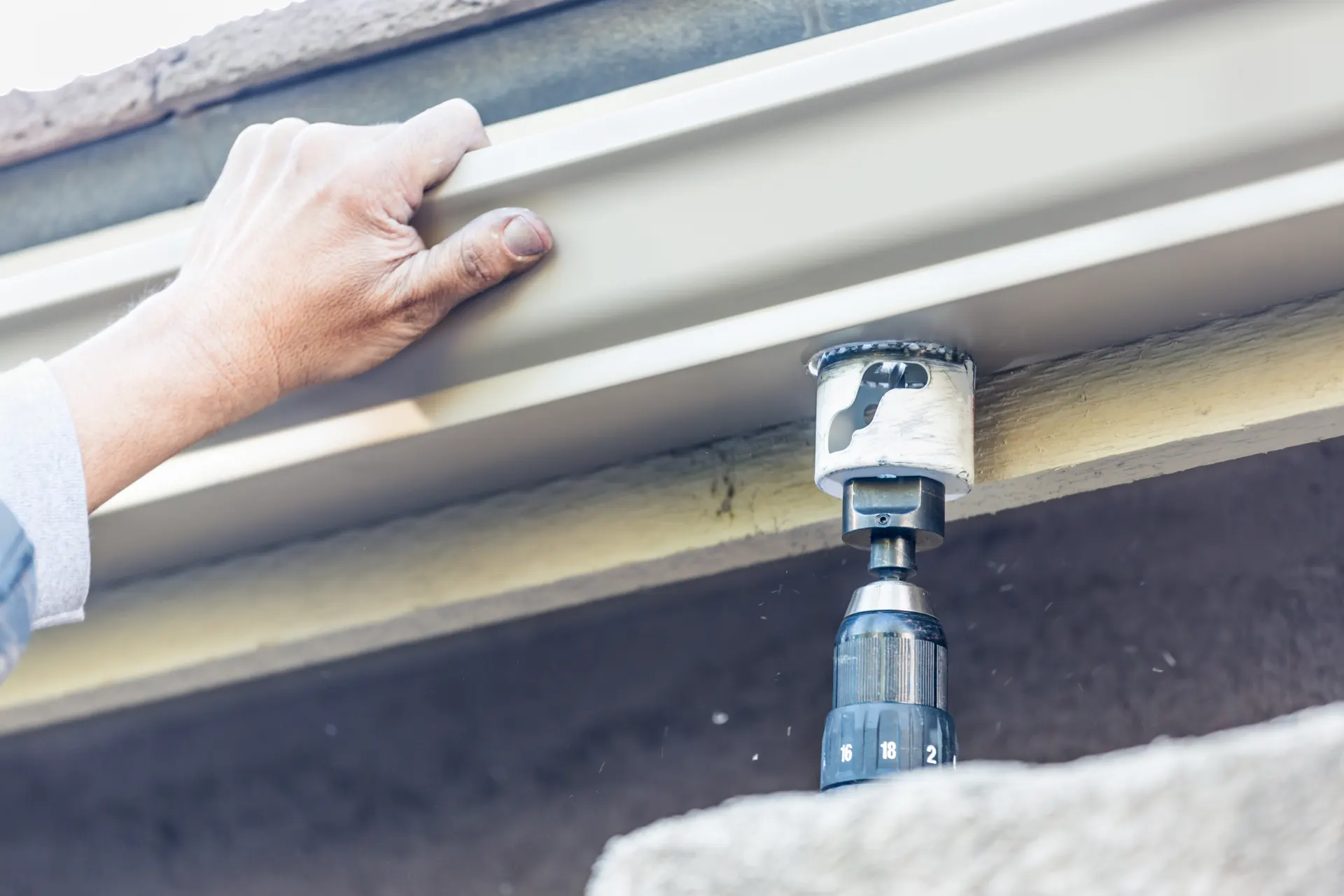
Aluminum owns roughly four out of five residential gutter installations in the US, and for defensible reasons: it can't rust, weighs little enough to hang on any fascia, forms beautifully through seamless machines, and comes factory-finished in dozens of baked-enamel colors. Its weaknesses are equally specific — it dents, it expands and contracts more than steel, and thin bargain coil (.019) fails years before quality .027 or .032 stock.
These are the specific failure modes licensed installers see most on this work.
Dents and crushing from ladders, hail, and falling branches — aluminum has no spring-back.
Thermal expansion working fasteners loose on long sun-exposed runs.
Thin-gauge coil oil-canning (rippling) and tearing at hangers under snow load.
One call to (888) 650-1415 — tell us your ZIP code and what the gutters are doing.
We connect you with a licensed local gutter professional who covers your area.
The pro inspects and quotes the work. No obligation, and the referral costs you nothing.
Your local pro completes the job — installation, repair, or maintenance.
.027 inch is the residential quality standard; .032 for snow country or long runs. Bargain installs use .019–.025 coil that dents if you look at it hard and tears at the hangers under snow load. Ask the gauge before you sign — it's the single best quality question.
No — aluminum oxidizes into a protective layer instead of rusting through. Failure modes are mechanical (dents, tears, loosened fasteners) and cosmetic (finish chalking), not corrosion, except where copper or treated-lumber contact sets up galvanic reactions.
Seamless, in almost every case — the cost difference is modest and the seam-leak problem disappears. Sectional aluminum from big-box stores makes sense mainly for DIY repair patches on a system nearing replacement anyway.
Match or slightly darken the trim color rather than chasing an accent. Factory baked-enamel finishes hold color for decades; matching trim makes gutters visually disappear, which is the goal.
Yes with .032 gauge, hangers every 16–18 inches, and ideally snow guards on the roof above to prevent avalanche loading. Standard installs with 24–30 inch hanger spacing are what fail in snow country.
Aluminum outperforms steel in salt air but bare cut edges and cheap fasteners still corrode; coastal installs should use stainless fasteners and get a freshwater rinse a couple of times a year. Copper is the premium coastal answer.
The most economical professional gutter system per year of service. Your licensed local installer quotes exact pricing by footage and gauge; GutterLinker's referral is free.
Yes — clean, scuff, self-etching primer, quality exterior acrylic. But factory finishes outlast field paint by years, so painting makes sense for color changes on sound gutters, not as rescue for failing finish.
That's the exact problem GutterLinker solves: call (888) 650-1415, tell us your ZIP code, and we connect you with a licensed local pro who does aluminum gutters in your area. No searching, no ad-page roulette — the referral is free and the quote carries no obligation.
Free referral to a licensed local gutter pro. One call. No obligation.
Call (888) 650-1415 Now Gutter